
Why Your Premium Changed When You Added a Third Vehicle
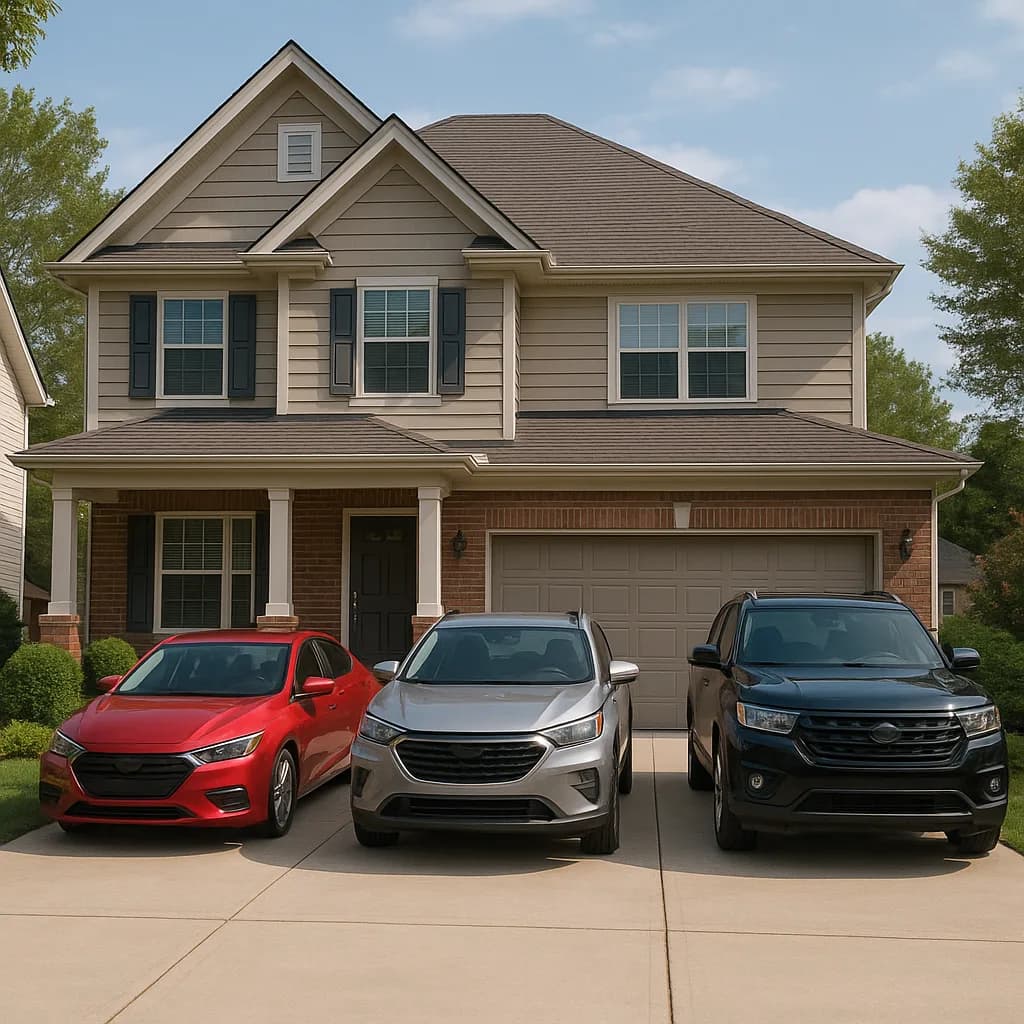
You added a third car to your Georgia policy and your premium increased more than you expected. The carrier didn't just add a flat amount for the new vehicle — your entire policy was re-rated, and every car on it now carries a different premium than it did before. That's the structural reality of multi-vehicle policies: adding or removing a car triggers a full recalculation, not a simple addition.
Georgia requires $25,000 bodily injury per person, $50,000 per accident, and $25,000 property damage as minimum liability coverage. When you add a vehicle, the carrier recalculates your household risk profile across all drivers and all cars, applies the multi-car discount to the new total, and reprices every vehicle. The discount applies to the policy, not to individual cars, so the benefit distributes unevenly depending on each vehicle's base rate.
Compare car insurance rates in your state
Get quotes from licensed carriers — no obligation, no spam, results in minutes.
Get Your Free QuoteGeorgia Uninsured Motorist Rate
19%
Nearly one in five Georgia drivers carries no insurance. Uninsured motorist coverage protects your household when an at-fault driver cannot pay, and adding it to a multi-vehicle policy costs less per car than buying it separately.
Insurance Information Institute, 2023
How Multi-Vehicle Policies Calculate Your Rate
A multi-car policy prices each vehicle individually, then applies a multi-vehicle discount to the combined total. The discount typically requires every vehicle to sit on the same policy and garage at the same address. When you add a car mid-term, the carrier re-rates the policy from scratch: it recalculates the base premium for every vehicle using your current driving record, credit score where Georgia law permits, and claims history, then applies the discount to the new total.
The multi-car discount does not mean every car costs less. A high-risk vehicle added to the policy can push the entire household into a higher rate tier, raising the base premium for cars that were already on the policy. The discount offsets some of that increase, but not all of it. That's why adding a teenager's car or a vehicle with comprehensive and collision coverage can raise your total premium more than the new car's standalone cost would suggest.
Georgia law allows insurers to use credit-based insurance scores, driving history, vehicle type, garaging location, annual mileage, and coverage selections to calculate rates. Each of these factors applies to every vehicle on the policy. When one changes, the entire policy recalculates.
Adding a vehicle mid-term re-rates your entire policy, not just the new car. Every vehicle's premium recalculates based on your current household risk profile.
What Drives Rate Differences Across Your Vehicles

Vehicle type matters: a sedan costs less to insure than an SUV, and a car with advanced safety features earns a lower rate than one without them. Repair costs drive the difference. A vehicle with expensive parts, high theft rates, or poor crash-test ratings carries a higher collision and comprehensive premium. The carrier pulls claims data for your specific make, model, and year, then prices that vehicle's coverage accordingly.
Coverage level matters just as much. Liability-only coverage on an older car costs far less than full coverage on a newer one. Deductible choices compound the difference: a $500 deductible costs more than a $1,000 deductible, and that gap multiplies across three or four vehicles. When you're managing multiple cars, choosing higher deductibles on low-value vehicles and lower deductibles on high-value ones can balance total cost without leaving any car underinsured.
Related Articles





How Household Drivers Affect Every Vehicle's Rate
Every licensed driver in your household affects the rate for every vehicle on the policy, even if they don't drive all the cars. Georgia carriers assume any household driver could operate any household vehicle, so they rate the policy using the riskiest driver's profile. A teenager with a learner's permit raises the premium for every car, not just the one they'll drive. A spouse with a recent at-fault accident does the same.
You can exclude a driver from the policy if they have their own coverage elsewhere or if they agree not to drive any household vehicle. Exclusions lower your premium but create a coverage gap: if the excluded driver operates a household car and causes a crash, the carrier denies the claim. Most households cannot exclude drivers without creating unacceptable risk, so the multi-driver rate impact is unavoidable.
Combining two policies after marriage or a household move usually lowers the combined premium because the multi-car discount applies to more vehicles. But if one spouse carries a DUI, multiple at-fault claims, or a suspended license, combining policies can raise the total cost. Compare the combined rate against two separate policies before merging.
Georgia Average Annual Auto Expenditure
Multi-vehicle households often pay less per car due to the multi-car discount, but total household cost depends on the number of vehicles, drivers, and coverage levels.
NAIC Auto Insurance Database Report, 2023
When Combining Policies Costs More Than You Expected
Two separate policies sometimes cost less than one combined policy, even without a multi-car discount. This happens when one driver qualifies for a preferred rate tier and the other does not. Combining the policies pulls both drivers into the same tier, and the higher-risk driver's profile raises the preferred driver's rate more than the discount lowers it. The math depends on each carrier's tier structure and discount schedule.
A vehicle titled to someone outside your household may not qualify for your policy's multi-car discount. Georgia carriers typically require every vehicle on the policy to be titled to a policyholder or a household member. If your adult child lives elsewhere and owns their car, adding it to your policy may not be possible, and even if the carrier allows it, the discount may not apply. Verify the same-policy requirement with your carrier before assuming a household member's car qualifies.
Compare Carriers That Write Multi-Vehicle Policies in Georgia
Georgia has 39 carriers writing auto insurance, and not all of them offer competitive multi-car discounts or write policies for households with three or more vehicles. State Farm, Geico, Progressive, Allstate, and Nationwide all write multi-vehicle policies in Georgia and offer online quotes. Acceptance, Bristol West, Dairyland, Direct Auto, and The General specialize in non-standard coverage and write policies for households with high-risk drivers or older vehicles that preferred carriers decline.
Request quotes from at least three carriers. The multi-car discount varies by carrier, and a smaller discount on a lower base rate can beat a larger discount on a higher one. Compare the total household premium, not the per-vehicle cost, and verify that every vehicle and every driver is rated accurately. A quote that excludes a household driver or underreports annual mileage will be rejected at binding, and the corrected rate may be higher than a competitor's honest quote.